
“Hey… can you help me buy a home?”
It’s a question more buyers are asking their parents.
Because saving a big deposit can feel like the hardest part of getting started.
But what if there was a way to move forward without needing a huge amount saved?
That’s where a family guarantor can come in.

What a family guarantor actually is
A family guarantor is usually a parent (or close family member) who helps support your home loan using the equity in their own property.
But here’s what’s important to understand.
They’re not:
- giving you cash
- going on your loan
- making repayments
Instead, they’re offering part of their home as additional security for the bank.
This reduces the lender’s risk — which can make it easier for you to get approved.
Why some buyers use a guarantor
For many first home buyers, the biggest challenge isn’t repayments.
It’s the deposit.
A guarantor can help bridge that gap.
In some cases, this can allow you to:
- buy with little or no deposit
- avoid paying Lenders Mortgage Insurance (LMI)
- get into the market sooner
How it works (in simple terms)
Here’s the easiest way to think about it.
Instead of saving a full deposit yourself…
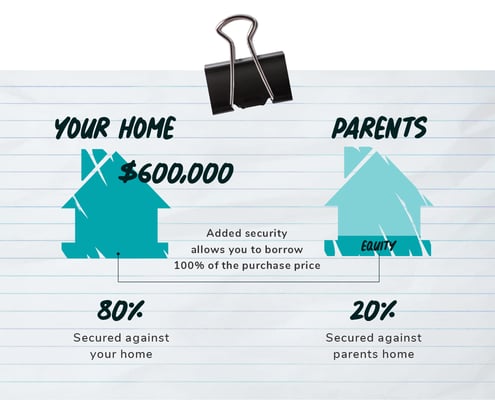
your family member uses a portion of their home equity as a safety buffer for the lender.
That makes your application stronger.
And because the lender sees less risk, they may approve your loan with less (or no) savings upfront.
Is it a long-term commitment?
Not necessarily.
For most buyers, a guarantor is a temporary step.
Once you’ve built enough equity in your home, the guarantee can often be released.
This might happen through:
- property value growth
- paying down your loan
- or refinancing
For many families, the goal is simple:
-
use the guarantor to get in
-
remove it as soon as possible
What families should think about first
This is where it’s important to slow down.
A guarantor loan can be a great option — but it needs to be approached carefully.
Some key things to discuss:
- how long the guarantee may be in place
- what your plan is to remove it
- how comfortable your family member is using their home as security
- what happens if circumstances change
A good structure protects both you and your family.
It’s not the only option
A guarantor isn’t always required.
Depending on your situation, there may be other ways to get into the market, such as:
- low deposit schemes
- government grants
- reducing upfront costs
- or combining multiple support options
Sometimes, buyers use a guarantor to reduce how much they need.
Other times, they don’t need one at all.
The takeaway
A family guarantor isn’t about taking on more risk.
It’s about using what’s already available — in a structured way — to get started sooner.
For many buyers, it’s simply a stepping stone.
Pre-qualify and see if you can own
